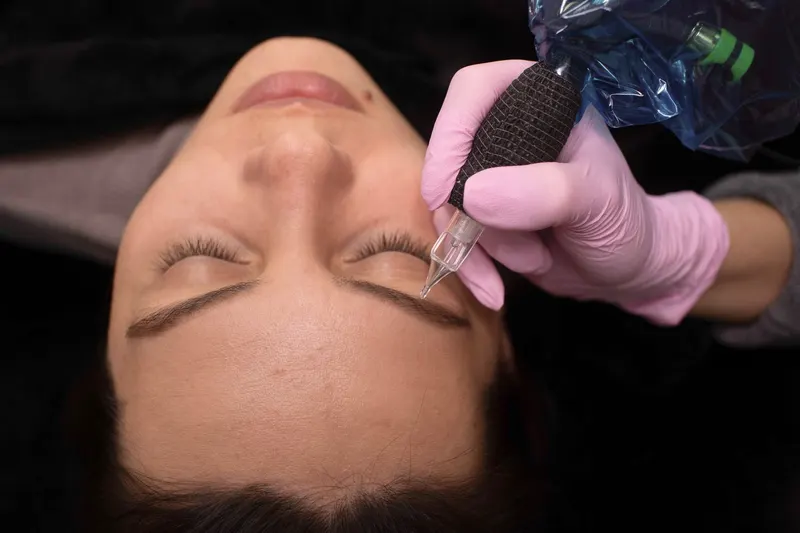
Why do contraindications matter?
Permanent makeup — both microblading and machine PMU — is a treatment that penetrates the skin. We introduce pigment into the epidermis and the upper layer of the dermis. With certain health conditions, this can lead to complications: difficult healing, infection, allergic reactions, unsightly results or more serious health consequences.
Below is a list of all the contraindications I take into account before every treatment.
Absolute contraindications (permanent)
The following conditions rule out the treatment completely — no exceptions:
- Pregnancy — at any stage
- Breastfeeding
- Autoimmune diseases (e.g. lupus, active psoriasis, vitiligo)
- A tendency to form keloids (hypertrophic scars) — the skin may react with excessive scarring
- HIV / AIDS / viral hepatitis — due to the risk for both sides
- Epilepsy — stress and stimuli can trigger a seizure
- Active chemotherapy or radiotherapy
- Haemophilia and other blood disorders with clotting problems
- Allergy to anaesthetic ingredients or PMU pigments — testing required before the treatment
Temporary contraindications
The following conditions don’t rule out the treatment permanently, but require waiting or a medical consultation:
Health condition
- Poorly controlled diabetes — with stably controlled diabetes, possible after a doctor’s consultation
- Hypo- or hyperthyroidism — treatment must be stabilised first
- Active skin infection in the brow area (breakouts, herpes, eczema)
- Fresh sunburn in the brow area
- Active cold sores — for lip blush, ruled out until symptoms clear
- Fever and immune-system infections — wait until recovery
- Alopecia areata — requires a doctor’s consent
Cosmetic and medical procedures
- Botox in the brow area — min. 2 weeks’ break
- Hyaluronic acid fillers in the brow area — min. 2 weeks
- Henna or brow tinting — min. 2 weeks’ break before the treatment
- CO₂ laser, chemical peels, microneedling in the brow area — min. 4–6 weeks
- IPL / laser treatments on the face — min. 4 weeks
- Facial surgery — min. 6 weeks or after full healing
Medications
- Retinol, tretinoin, adapalene — stop 7–14 days before the treatment
- Isotretinoin (Roaccutane) — treatment possible 3 months after finishing the course (after consulting your doctor)
- Aspirin, Acard, ibuprofen, other NSAIDs — 48 hours before the treatment (if possible)
- Anticoagulants (warfarin, heparin) — a medical consultation is required
- Long-term corticosteroids — they affect healing, a consultation is required
- Antibiotics — wait until the course is finished
Skin I won’t work on
Regardless of general health, I won’t perform the treatment when:
- There are active breakouts, acne or other skin changes in the brow area
- The skin is so oily and porous that precision is impossible (recommendation: powder brows)
- The brows have old, poorly applied pigment that needs correcting first
- There are visible marks from a previous failed treatment that must be removed first
What do I do when I see a contraindication?
I say it straight. If at the consultation I see the treatment isn’t safe for you or won’t give a good result, I decline. It’s the only honest option.
Sometimes we postpone the appointment by a few weeks (e.g. waiting for cold sores to clear or a course of antibiotics to finish). Sometimes I also suggest a different method than the one you asked about.
The consultation is free — even if the outcome is a recommendation not to do the treatment right now.
Frequently asked questions
Does diabetes rule out microblading?
Poorly controlled diabetes is a contraindication — healing is impaired and the risk of infection is higher. Well-controlled diabetes may not rule out the treatment, but it requires a doctor's consultation and a conversation with me before booking.
Can microblading be done during pregnancy?
No. Pregnancy is an absolute contraindication. It applies at every stage of pregnancy and during breastfeeding.
When can microblading be done after Botox?
You should wait at least 2 weeks after Botox in the brow area. Botox changes muscle tension and can affect the symmetry of the final result.
Does using retinol rule out the treatment?
Yes — temporarily. Retinol and retinoids should be stopped 7–14 days before the treatment. They sensitise and thin the skin, which impairs healing and can cause the pigment to fade quickly.
I have a thyroid condition — can I have microblading?
With stably controlled hypo- or hyperthyroidism (normal TSH results, ongoing treatment), microblading is usually possible. Let me know about your situation at the consultation.