Hair-stroke brows
Classic microblading — each hair drawn individually, following the natural direction of growth. The effect: brows you can't tell are there. I recommend it for normal, combination or dry skin.
A manual technique, one hair at a time. The effect of natural brows — visible for 1–2 years, indistinguishable from real hairs.
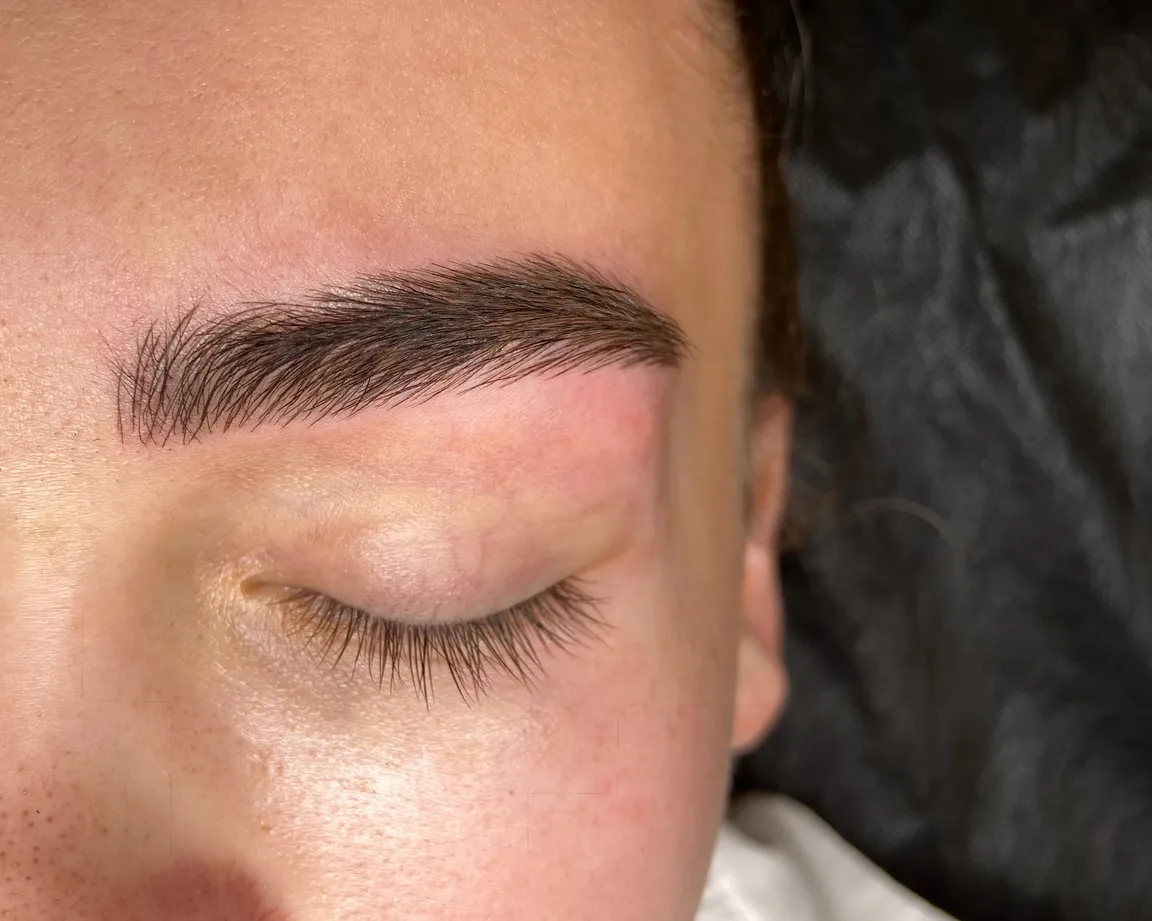
Microblading is a semi-permanent makeup technique in which each brow hair is drawn by hand with a special pen fitted with needles. The pigment is applied into the surface layer of the skin, giving the effect of natural, full brows without daily makeup.
Unlike a regular tattoo, microblading isn't permanent — the effect lasts one to two years and gradually fades, which lets you adapt the shape and colour to changing trends and your features.
These names are often confusing, but in practice they describe the same thing. Microblading, the hair-stroke method (hairstroke), the feather method (feathering) and the manual method are different names for one technique: drawing individual hairs by hand, one stroke at a time, for a natural brow effect.
I perform microblading by hand, using fine needles — not incisions or scalpel cuts, as is sometimes mistakenly written. The pigment reaches only the surface layer of the skin. I match the right method to you during the consultation.
Whatever the name, how long the effect lasts (usually 1–2 years) depends mainly on your skin type, aftercare and lifestyle — not on the name of the method.
Classic microblading — each hair drawn individually, following the natural direction of growth. The effect: brows you can't tell are there. I recommend it for normal, combination or dry skin.
Microblading combined with powder shading — e.g. hair strokes at the root and a soft shadow across the brow. This is one example of combining techniques; the exact variant we decide on at the consultation. Fuller, but still natural, and longer-lasting than classic microblading.
Before you come for the treatment, it's worth preparing properly — I've gathered all the tips in the article how to prepare for microblading. If you're wondering about the sensations during the treatment, also read does microblading hurt.
A few real transformations from my studio — natural hair-stroke enhancement.
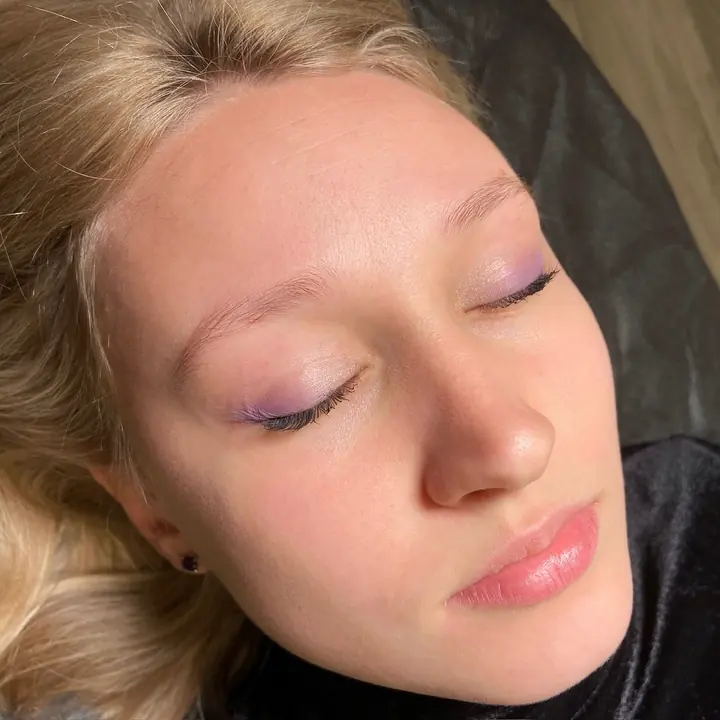
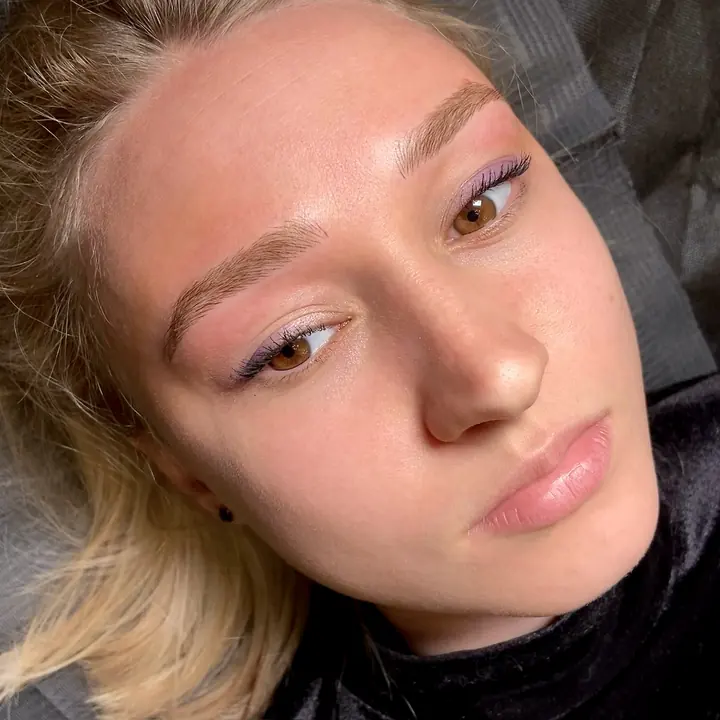
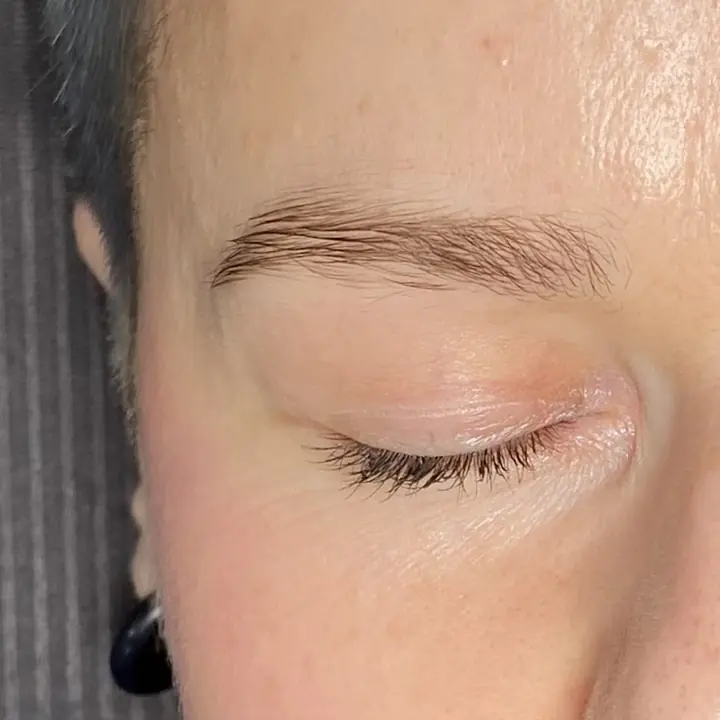
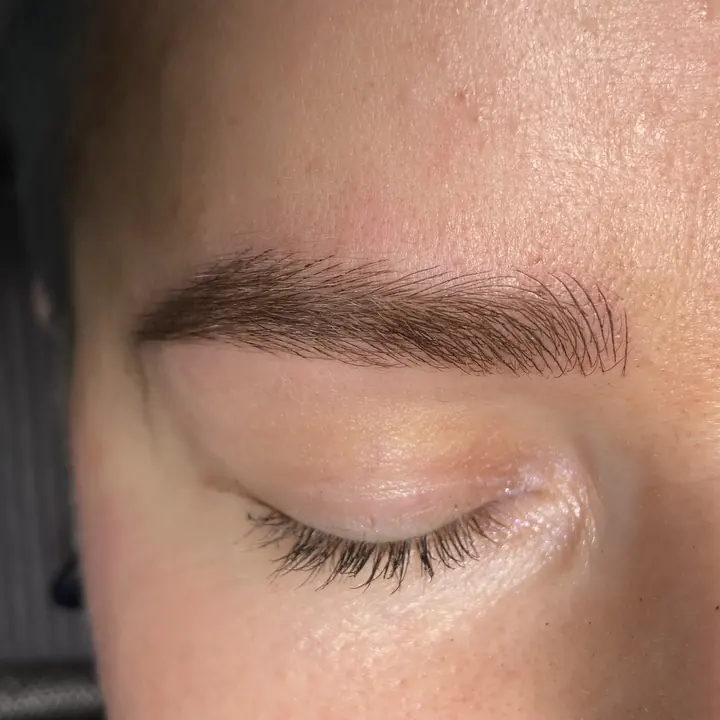
Surface healing takes about 4 weeks. For the first 7–10 days the colour is more intense (it darkens after the treatment), then it gradually fades. After 4–6 weeks I recommend a touch-up, which evens out any gaps after healing.
You'll find a detailed day-by-day healing guide on the page stages of permanent brow healing. And on how long the effect lasts and what it depends on, I write in the article how long microblading lasts.
This is a short list. The full contraindications — permanent, temporary, medication-related and those linked to other treatments — I describe in detail in the article: Contraindications to permanent makeup — the full list →
If in doubt, consult me before booking. The consultation is free and with no obligation.
The effect lasts 1 to 2 years, depending on skin type and aftercare. The treatment itself takes about 2.5 hours (consultation + pigmentation).
A numbing cream is applied before the treatment to minimise discomfort. Most clients describe the sensation as light pressure or scratching.
Aftercare is based on regularly rinsing the brows with water and applying a very thin layer of petroleum jelly — morning and evening also wash them with a low-pH soap. Don't scratch the skin; avoid sauna, pool, sweating and sun. The skin heals in about 4 weeks.
Contraindications: pregnancy and breastfeeding, active cancer, a tendency to keloids, psoriasis, active cold sores, Botox in the brow area (wait 3 weeks), blood-thinning medications.
The current price list is on mojebrwi.com/en/cennik. The microblading treatment includes a free consultation before pigmentation.
I recommend a touch-up 4–6 weeks after the first treatment — it fills in any gaps after healing. Then a refresh every 12–18 months.
In practice these are names for the same technique — drawing hairs by hand with a needle (the manual method). I match the right method to your skin during a free consultation.
The consultation is with no obligation. If microblading isn't right for your skin, I'll tell you straight.