The short answer: a little, but not the way you think
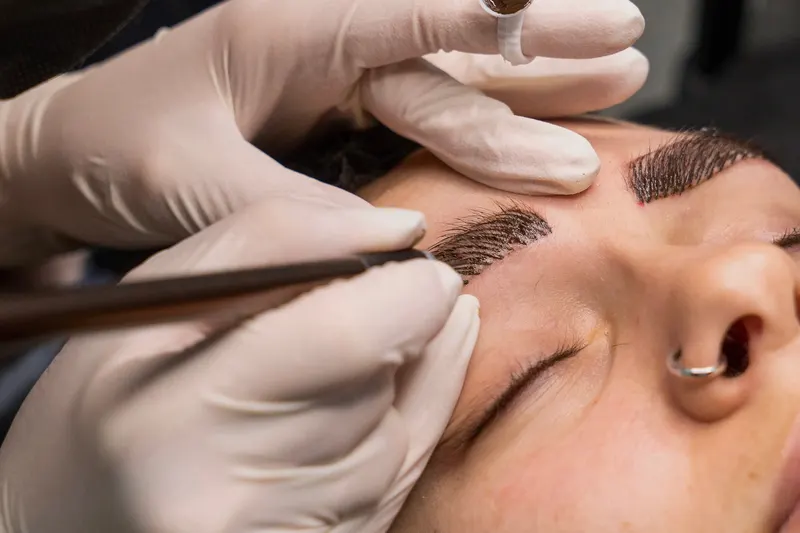
Microblading is a treatment in which I draw microscopic incisions in the skin and apply pigment into them. It sounds unpleasant — but most of my clients say afterwards that they expected far worse.
On a scale of 1 to 10 — where 10 is unbearable pain — most rate microblading at 2–4. It’s compared to: plucking brows with tweezers, waxing, a tattoo elsewhere. It’s not a pleasure, but it’s bearable.
What does the anaesthetic look like?
Two types of local anaesthetic are used:
Primary anaesthetic (before the treatment)
I apply a numbing cream (containing lidocaine) to the brows and surrounding area 10–15 minutes before the treatment. It works on the surface — it reduces skin sensitivity but doesn’t eliminate it completely. The first few passes may be slightly noticeable.
Secondary anaesthetic (during the treatment)
After the first pass the skin is open — that’s when I apply a stronger numbing cream that works directly on the nerve endings in the micro-wounds. After that, most clients feel almost nothing.
This is exactly why the first phase of the treatment is usually more noticeable than the rest. Many people don’t expect this and say it’s harder at the start than at the end.
What increases sensitivity to pain?
Before every consultation I ask about a few things that have a real effect on the comfort of the treatment:
- Menstrual cycle phase — a few days before and during menstruation the pain threshold drops significantly. It’s best to plan the treatment in the second half of the cycle
- Coffee and energy drinks — caffeine dilates the blood vessels and hampers the anaesthetic. Avoid for at least 4 hours before the treatment
- Alcohol — thins the blood and reduces the effectiveness of the anaesthetic. At least a 24-hour break
- Blood-thinning medications — aspirin, ibuprofen (at least a 48-hour break if possible). Be sure to tell me about any medications you take
- Lack of sleep and high stress — the body is more reactive then. Try to sleep well the night before
- Retinol and acids on the face — they sensitise the skin. Stop 7–14 days before the treatment
How to prepare so it hurts as little as possible?
- Schedule the treatment in the middle of your cycle (around days 10–20)
- Don’t drink coffee that day — at least 4 hours before
- Avoid alcohol for 24 hours
- Rest and sleep well the night before
- Have a light meal — dizziness is more likely on an empty stomach
- Don’t take ibuprofen or aspirin 48 hours before the treatment (unless they’re necessary)
You’ll find the full preparation list — what to stop a week and a month before — in the article how to prepare for microblading.
And what about after the treatment?
Right after the treatment the brows may sting slightly and be red — a normal skin reaction after micro-injuries. The discomfort usually subsides within 2–4 hours.
The next day the brows are calm. Aftercare in the first days is based on regularly rinsing with water and a thin layer of petroleum jelly — I describe the detailed protocol in the article stages of permanent brow healing.
Want to know more about the treatment itself? You’ll find the method details, results and prices on the microblading Wrocław page.
Frequently asked questions
Does microblading hurt more than a tattoo?
Most people with tattoos rate microblading as comparable or lighter. The brows are a sensitive area, but the anaesthetic is more effective here than with a standard tattoo. The treatment also takes less time.
Can I take a painkiller before the treatment?
Paracetamol is safe. Don't take ibuprofen or aspirin — they thin the blood and impair healing. If you take other medications regularly, be sure to tell me before the treatment.
Do powder brows hurt as much as microblading?
Powder brows are usually felt as slightly less painful — the PMU machine works differently from the microblading blade. The anaesthetic is used the same way. Sensations are, however, individual.
What if I have a very low pain threshold?
Tell me about it at the consultation. We can wait longer with the primary anaesthetic, use an extra cream and carry out the treatment in several stages if needed. No client has ever had to stop the treatment because of pain.