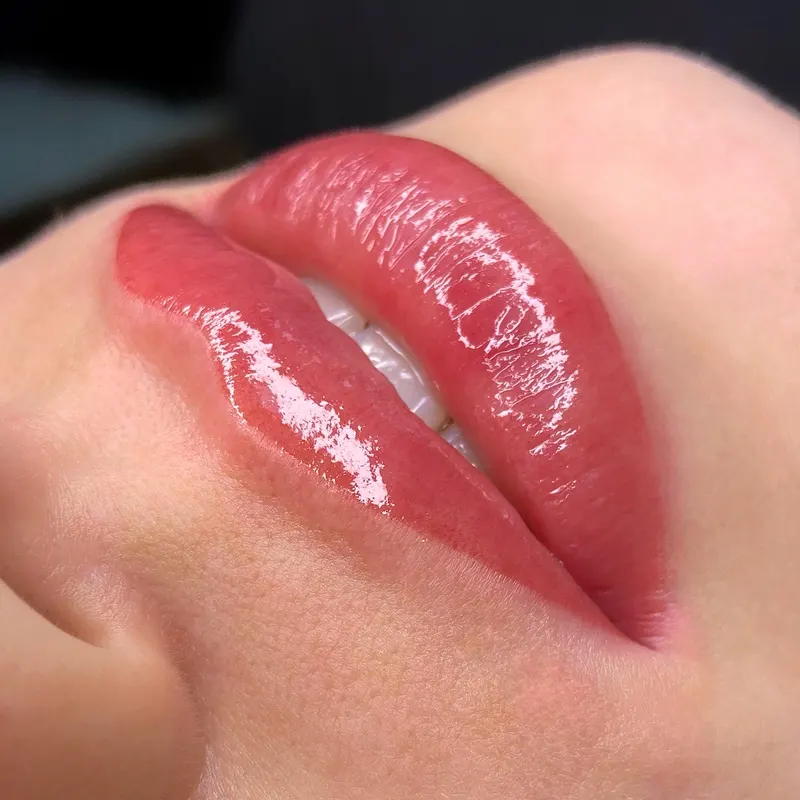
What is lip blush?
Lip blush is a delicate micropigmentation of the lips — a type of permanent makeup that gives the lips a natural flush, defines the contour and evens out the colour. It’s not a bold, “painted-on” lipstick, but a subtle enhancement of the lips’ natural shade.
The effect resembles lips touched with a soft balm — visible, healthy, yet natural. Lip blush is one of the treatments I perform as part of permanent lip makeup.
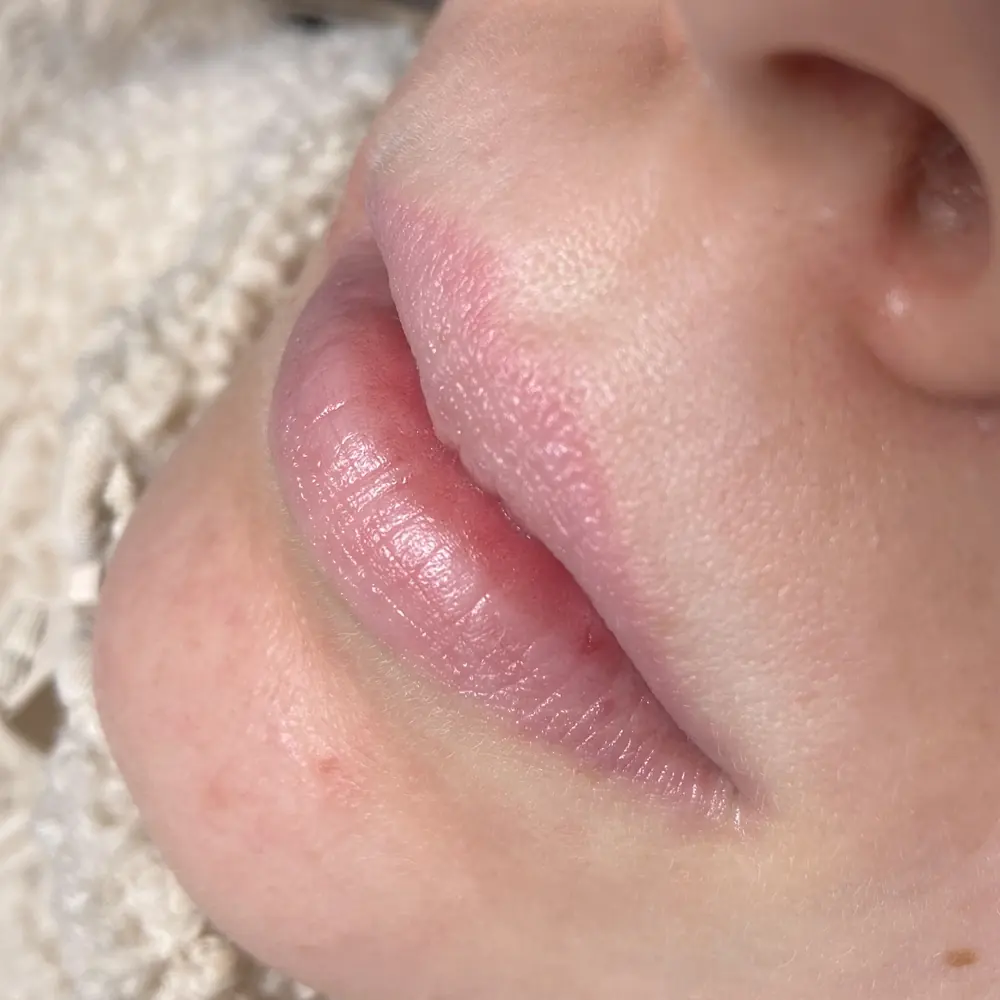
The result right after the treatment
Right after the treatment the lips are intensely coloured — the colour is much darker and more saturated than the final result. They may be slightly swollen and sting gently, like after a long kiss in the cold. This is a normal reaction.
Don’t judge the result at this moment — it’s only the beginning of the process. You’ll see the real colour only after full healing.
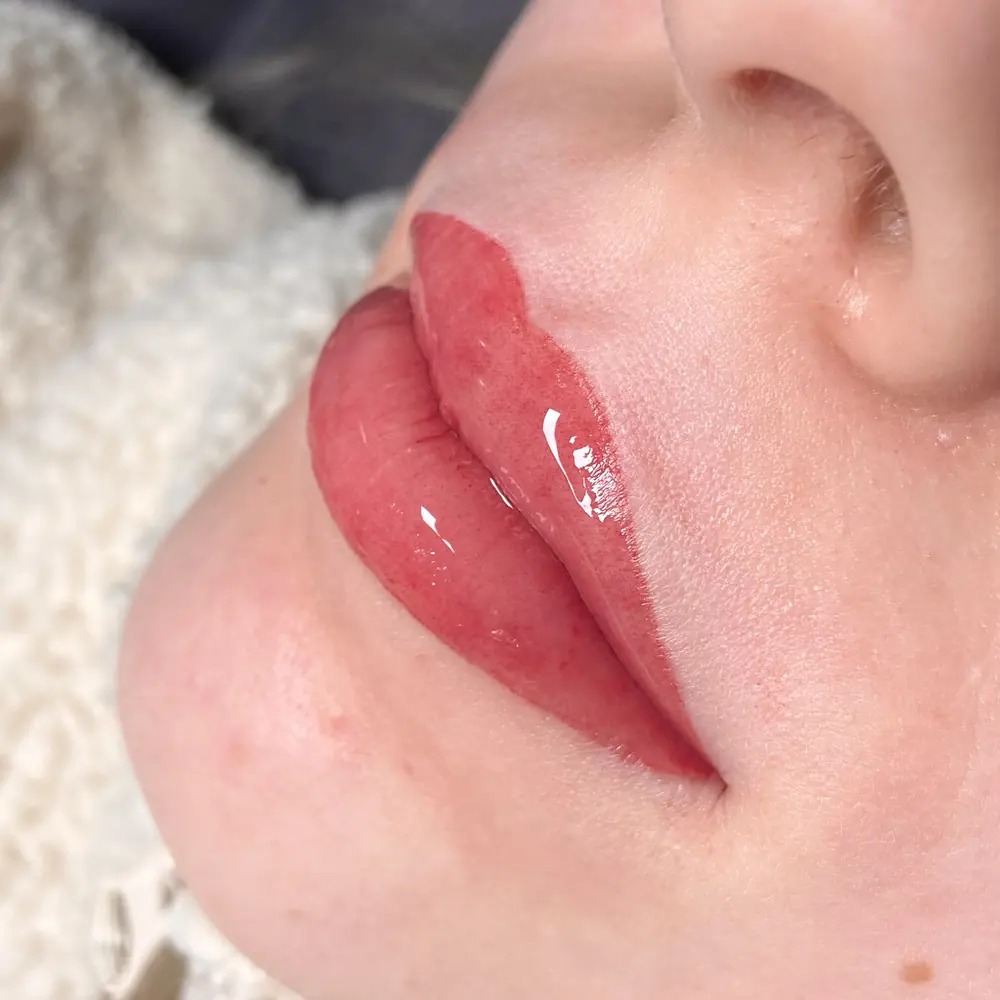
Lip healing day by day
Day 1–2
Lips intensely coloured, light swelling. Drink through a straw, eat soft food. Don’t rub or touch your lips. For aftercare, use a cotton pad moistened with water and coconut oil or a lip balm — apply 3 times a day.
Day 3–5
Flaking appears — the skin starts to come off. This is a key moment: don’t peel off the skin, as you may remove pigment and create unevenness in the colour. Continue moisturising with coconut oil or balm 3 times a day.
Day 6–10
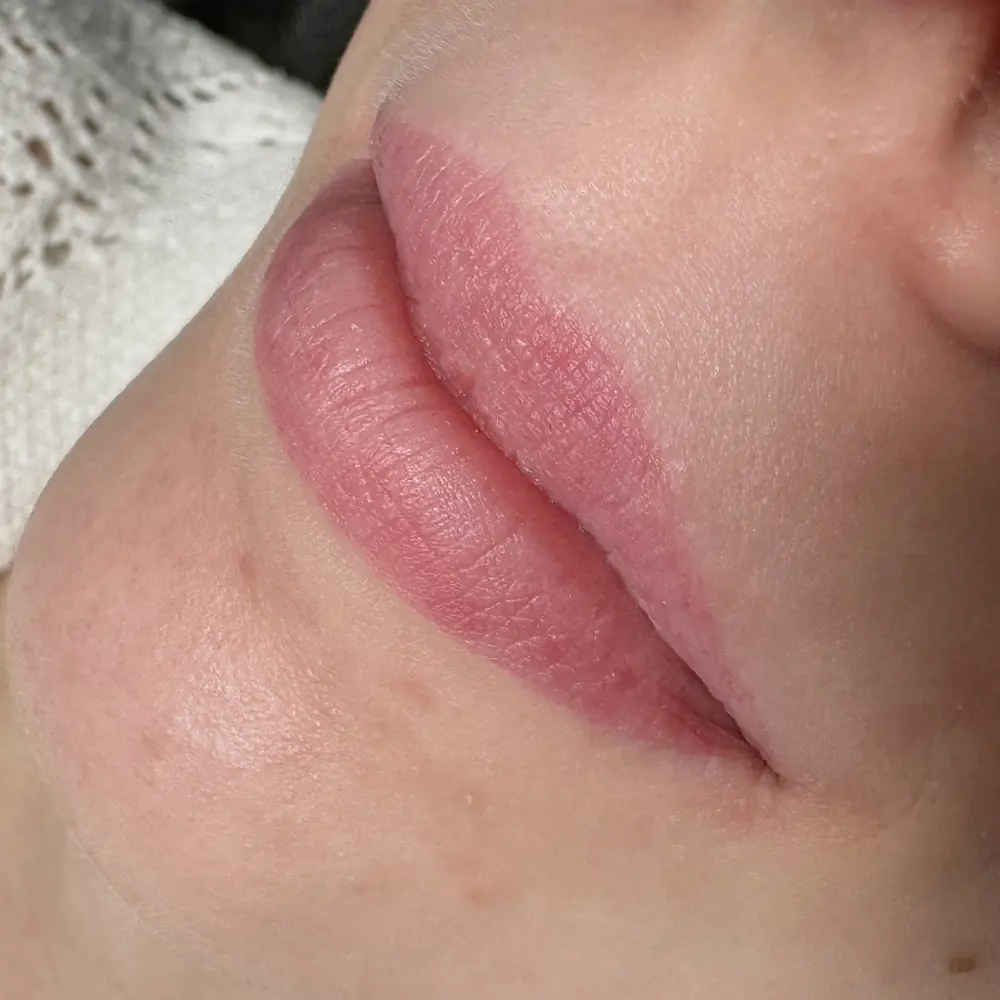
The flaking subsides. The colour may appear very pale — as if it has disappeared. This is normal. The pigment “comes back” over the following weeks as the skin rebuilds.
Week 4–6
The colour stabilises and shows its true shade. Only now do we assess the result and decide on a possible touch-up.
Lip aftercare after the treatment — the protocol
The skin on and around the lips is especially sensitive after the treatment, so it must be handled with extra care and good hygiene.
- Don’t rub or touch the lips — this is key for even healing
- Cleanse the lips with a cotton pad moistened with water
- Use coconut oil or a lip balm — apply 3 times a day
- Drink through a straw and eat soft, not-hot food in the first days
- Keep good hygiene — wash your hands often before touching the lip area
Why is a touch-up needed?
The lips are an exceptionally well-supplied and mobile area — pigment takes here less evenly than on the brows. After the first treatment the colour often comes out uneven or pale. A touch-up after 4–6 weeks evens out the colour and saturates the spots that took the pigment less well.
Some people need a second touch-up — especially with very pale lips or a tendency toward cold sores. This is normal and doesn’t mean anything went wrong.
How long does lip blush last?
Lip blush usually lasts 2–3 years. Its longevity is affected by: metabolism, sun exposure (a UV filter on the lips is essential), smoking and aftercare. A refresh is recommended every 1.5–2 years.
Important: cold sores and lip blush
If you get cold sores, the treatment can trigger them. In that case I recommend taking an antiviral medication as a precaution (e.g. aciclovir) before and after the treatment — we’ll discuss it at the consultation. An active cold sore is a contraindication to the treatment until it heals.
Frequently asked questions
What does lip blush look like right after the treatment?
Right after the treatment the lips are intensely coloured, slightly swollen and may sting a little. The colour is much darker than the final result — this is normal and subsides during healing.
How long do lips heal after lip blush?
The lips heal on the surface in about 7–10 days, and the colour fully stabilises after 4–6 weeks. In the first days light flaking appears — don't peel off the skin.
Does lip blush hurt?
The lips are a sensitive area, but the treatment is done with anaesthetic. Most clients rate the discomfort as moderate — comparable to microblading, sometimes slightly more intense due to the lips' blood supply.
Can I choose the colour myself?
Yes, we choose the colour together at the consultation — to suit your skin's undertone and the natural colour of your lips. Remember that lip blush enhances your natural shade rather than replacing it like lipstick, so the result is always natural.